Has a warning light appeared on your dashboard, and has someone read out a code like P2002 without explaining what it means? You’re not alone. Fault codes are confusing for most drivers, and it is hard to know whether you are facing a small fix or a costly repair.
In this blog, you will learn how AI powered vehicle diagnostic software works, why it makes fault codes easier to understand, and you will see why a detailed vehicle fault code report is often the smartest first step for any petrol or diesel owner.
What Is AI Powered Vehicle Diagnostic Software?
Every modern car has an onboard computer that monitors sensors across the engine, emissions system, gearbox and more. When something falls outside its normal range, the car stores a fault code and may switch on a warning light.
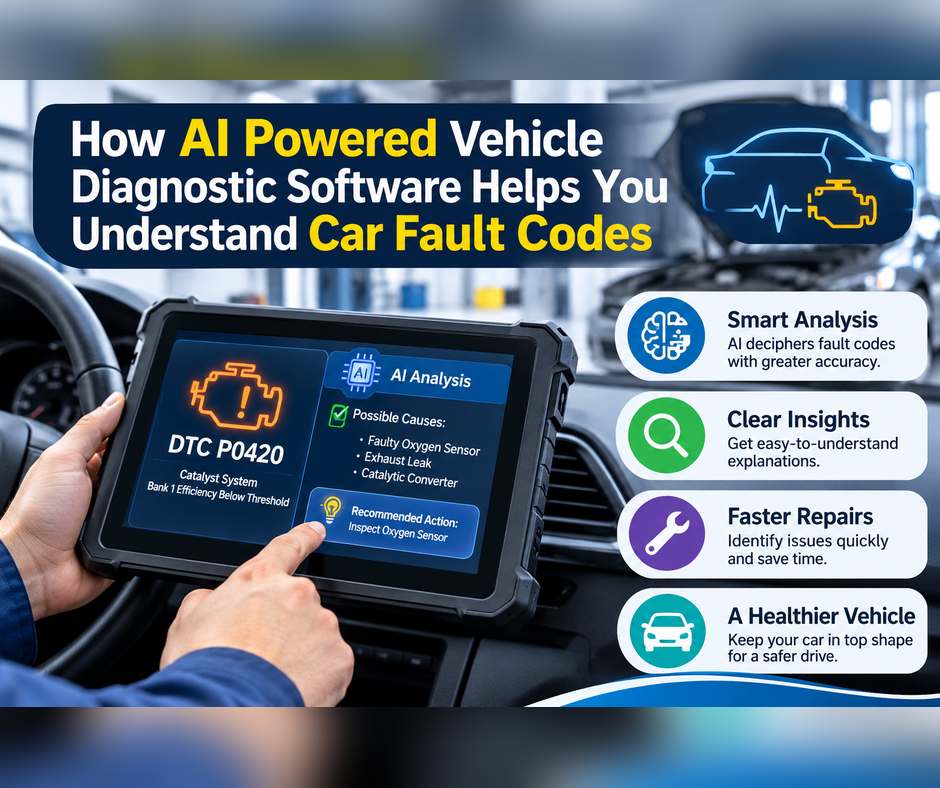
AI powered vehicle diagnostic software reads those codes and then goes a step further. It compares them against huge amounts of data from similar vehicles, so it can show what the code is likely to mean for your car in particular.
It works with most popular petrol and diesel models, including:
- Volkswagen
- Audi
- BMW
- Ford
- Peugeot
- Citroën
- Vauxhall
- Land Rover
- Jaguar
Why Are Fault Codes So Hard to Understand?
A standard code reader gives you a code and a short label. That sounds helpful, but the label rarely tells the full story. Here is why drivers get stuck:
- One code can have several possible causes
- Several codes can appear together and point to a single problem
- Generic descriptions ignore your car’s make, model and software
- Some faults are only symptoms of something deeper
- Guessing leads to replacing parts that were never faulty
Many drivers end up paying for parts they didn’t need, simply because nobody looked at the whole picture.
How Does AI Car Diagnostics Make Sense of the Data?
AI car diagnostics looks at the pattern rather than a single code in isolation. It checks which codes appeared together, how often they return, and what the live sensor readings are doing at the same moment.Here is what that looks like in practice.
1. Clear, Plain English Explanations
Instead of a cryptic code, you get a description that explains what the fault is, which part of the car it relates to, and how serious it is.
2. Likely Causes in Order of Probability
The software ranks the most likely causes, so you are not left paying for guesswork. A boost pressure fault, for example, might trace back to a split hose rather than an expensive turbo.
3. Links Between Related Faults
Multiple codes often share one root cause. Car fault code analysis helps connect them, which saves time and money.
4. Urgency Guidance
Some faults mean you should stop driving. Others can wait until your next service. Knowing which is which gives you peace of mind.
Why a Vehicle Fault Code Report Is Worth Having
A vehicle fault code report puts everything in one clear document. It is useful in more ways than most drivers expect.
Confidence When Speaking to a Specialist
When you can explain exactly what your car has reported, you are far less likely to be talked into unnecessary work.
Better Buying Decisions
Thinking of buying a used diesel or petrol car? A report can reveal stored faults, past problems and software issues that a quick test drive would never show.
Spotting Problems Early
Small faults often show up in the data weeks before a warning light appears. Catching them early can prevent bigger bills.
A Record You Can Keep
A saved report is handy for future servicing, resale and any conversation about your car’s history.
What Does a Proper Diagnostic Process Involve?
Good diagnostics involves much more than plugging in a reader and printing a code. A qualified specialist will typically:
- Connect to the vehicle and read every control module, not just the engine.
- Record all stored and pending fault codes.
- Check live sensor data and freeze frame readings.
- Run the information through AI powered vehicle diagnostic software.
- Look for patterns between related codes.
- Identify the most likely root cause.
- Check for software changes or earlier modifications.
- Produce a clear report with next steps.
The goal is to understand the real problem, not just clear a warning light for a few days.
Can AI Replace a Human Specialist?
No, and it shouldn’t. The software is a powerful tool, but it works best alongside an experienced person who understands how the car behaves in the real world. The technology does the heavy lifting with data, and the specialist applies judgement, testing and practical know how. Together, they give you an answer you can trust.
Frequently Asked Questions
1.What does a fault code actually tell me?
A fault code points to the system where a problem was detected. It does not always name the failed part, which is why deeper analysis matters.
2.Is it safe to clear a fault code myself?
Clearing a code removes the message but not the cause. The light will usually return, and you may lose useful data that a specialist needs.
3.Will a report work on both petrol and diesel cars?
Yes. The software supports a wide range of petrol and diesel vehicles, although the depth of data varies by make, model and age.
4.How long does fault code analysis take?
Reading the codes takes minutes. Interpreting them properly takes a little longer, but it is far quicker than replacing parts by trial and error.
Professional Vehicle Diagnostics You Can Rely On
If your car has a warning light, a rough running issue or a code nobody has explained properly, it makes sense to get it assessed by people who work with this technology every day.
Instead of guessing, you can find out exactly what your car is telling you and decide what to do next with confidence.
Ready to Understand Your Car’s Fault Codes?
Warning lights don’t have to be stressful. With AI powered vehicle diagnostic software behind the process, fault codes turn from confusing messages into clear, useful information.Contact our team today to arrange your vehicle fault code report and get straight answers about your car.