
Introduction
Has your diesel vehicle suddenly displayed an AdBlue warning, engine management light, or message telling you that the vehicle needs attention? AdBlue faults can be frustrating, especially when the vehicle still appears to drive normally. However, ignoring the warning can allow a relatively straightforward issue to develop into a more complicated and expensive problem.
AdBlue is an important part of the emissions system on many modern diesel vehicles, and several components work together to ensure it operates correctly.
In this guide, we'll explain what the AdBlue system does, common causes of adblue fault codes, how an AdBlue injector fault can affect your vehicle, what can happen when there is an adblue pump failure, and why professional diagnostics can help identify the right solution.
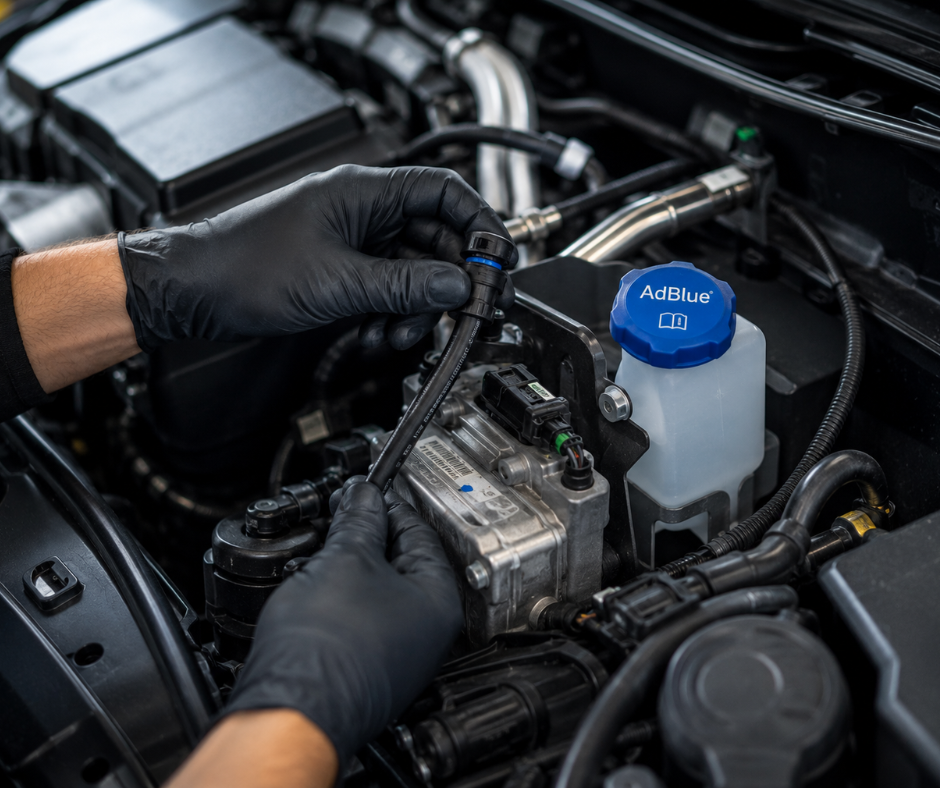
What Is an AdBlue System?
AdBlue is a diesel exhaust fluid used by vehicles equipped with Selective Catalytic Reduction (SCR) technology. The system introduces a controlled amount of AdBlue into the exhaust, where it helps reduce harmful nitrogen oxide emissions.
Many modern Euro 6 diesel vehicles use AdBlue technology, including:
- Volkswagen
- Audi
- BMW
- Mercedes Benz
- Ford
- Peugeot
- Citroën
- Vauxhall
- Land Rover
- Jaguar
The system relies on several components working together, including the AdBlue tank, pump, injector, sensors and electronic control systems. If one component develops a fault, the vehicle may record diagnostic codes and display a warning to the driver.
Why Do AdBlue Systems Develop Faults?
AdBlue systems operate in demanding conditions, so faults can develop for several reasons. Some issues are electrical or sensor related, while others involve individual components within the SCR system. Common causes include:
- AdBlue injector problems
- Pump pressure faults
- NOx sensor faults
- AdBlue level sensor issues
- Tank heater problems
- Wiring or communication faults
- Contaminated or crystallised AdBlue
- Electrical supply problems
Age, mileage and operating conditions can also influence reliability. Identifying the actual cause is important because replacing parts without proper testing may not resolve the underlying issue.
What Are the Common Signs of an AdBlue Fault?
AdBlue problems can produce several different symptoms depending on which part of the system is affected.
Common warning signs include:
- An AdBlue warning message
- Engine management warning lights
- An emissions system warning
- Starting restrictions being displayed
- Reduced vehicle performance
- Diagnostic fault codes
- Incorrect AdBlue level readings
Some faults may appear intermittently, while others can remain present every time the vehicle is started. A diagnostic assessment can help determine whether the issue is related to the AdBlue supply, injection system, sensors or electronic communication.
What Do AdBlue Fault Codes Mean?
Modern diesel vehicles can store specific diagnostic information when the SCR system detects an abnormal reading. These adblue fault codes can provide useful information about the area requiring investigation.
However, a fault code does not always mean that the component named in the code needs replacing. For example, a code relating to an injector could potentially be caused by an electrical, wiring or supply issue. This is why proper fault finding is important. The code should be considered alongside live data, system readings and the vehicle's symptoms before deciding on a repair or reset.
What Happens With an AdBlue Injector Fault?
The AdBlue injector is responsible for introducing the correct amount of fluid into the exhaust system. If it becomes faulty, blocked or fails to operate correctly, the SCR system may not be able to function as intended.
An AdBlue injector fault can contribute to warning messages, incorrect dosing and emissions system errors. Diagnostic testing can help determine whether the injector itself is faulty or whether another part of the system is responsible for the problem.
What Can Cause an AdBlue Pump Faiure?
The AdBlue pump plays an important role in delivering fluid through the system at the required pressure. An adblue pump failure can therefore prevent the system from operating correctly.
Pump related problems may result from electrical faults, internal component failure or issues elsewhere in the AdBlue system. Testing the pump and associated circuits can help establish whether replacement is actually required.
Why Professional AdBlue Diagnostics Matter
Because several components interact within the SCR system, accurately identifying the cause of an AdBlue warning is not always straightforward.
Professional diagnostics can help to:
- Read stored diagnostic fault codes.
- Assess relevant live data.
- Identify the affected system or component.
- Check electrical and communication faults.
- Assess injector and pump operation.
- Determine whether sensors are providing accurate readings.
- Identify the appropriate repair or system solution.
- Carry out applicable resets once the underlying issue has been addressed.
The objective is to identify the actual cause rather than simply clearing a warning and allowing the problem to return.
Can AdBlue Faults Be Resolved Without Replacing Everything?
In many cases, an AdBlue warning does not mean the entire system needs replacing. The required solution depends on the vehicle, fault recorded, component condition and results of diagnostic testing.
A specialist assessment can help establish whether the issue relates to a sensor, injector, pump, wiring, software communication or another part of the SCR system.
Addressing the underlying fault is generally the best approach for maintaining reliable operation and avoiding unnecessary parts replacement.
Frequently Asked Questions
How do I know if my vehicle has an AdBlue fault?
Common signs include AdBlue warning messages, engine management lights, emissions warnings, incorrect fluid level readings and stored diagnostic codes. A diagnostic scan can help identify the cause.
What does an AdBlue injector fault mean?
It indicates that the vehicle has detected a problem associated with the AdBlue injection system. Further testing is needed to establish whether the injector itself or another related component is responsible.
What happens during an AdBlue pump failure?
A failed pump may prevent AdBlue from being delivered through the system correctly. This can trigger warning messages and diagnostic faults and should be investigated promptly.
Can AdBlue fault codes simply be reset?
A reset may clear a stored warning in some circumstances, but the underlying cause should be identified first. Clearing a code without addressing the fault may result in the warning returning.
Professional AdBlue Diagnostic Solutions
If your diesel vehicle is showing an AdBlue warning or storing SCR related diagnostic faults, getting the system properly assessed can save time and prevent unnecessary parts replacement.
Professional diagnostic testing can help identify the source of the problem, whether it involves the injector, pump, sensors, electrical system or another component. Once the cause is understood, the appropriate solution or reset can be considered.
Need Help With an AdBlue Fault?
Don't ignore an AdBlue warning and hope it disappears. Early diagnostics can provide a clearer picture of what is happening and help you make an informed decision about the next step.
Contact MPG Tuning today to discuss your AdBlue fault and arrange professional diagnostic support for your diesel vehicle.